A white-label design system adopted across Cargill’s global products
I helped scale Cargill’s design system. I audited it, documented it, brought its designers together through ceremonies, town halls and office hours, and connected them more closely with developers.
- Role
- Design system designer
- Scope
- Audits, Documentation, Ceremonies and town halls, Office hours, Handoff and design QA, Data-viz standards
- Worked with
- Designers, developers, global IT
- Tools
- Figma, Power BI, Azure DevOps
The challenge
Cargill wanted its products around the world to look and behave consistently, without every team solving the same problems on its own. A design system existed, but a system only helps if teams know it, trust it and actually build with it.
How the work ran
Audit
Review the legacy system, the product teams using it and the templates they built from.
Document
Write down the foundations and components so anyone can pick them up.
Bring people together
Global ceremonies, town halls and office hours for the designers using the system.
Connect with development
Closer ties with developers on problem solving, handoff and design QA.
Extend to data
Data-visualization standards and role-based reporting in Power BI.
1Audit
I started by auditing the legacy design system, the product teams using it, and the templates they worked from. That gave a clear picture of how teams were really using the system.
2Document
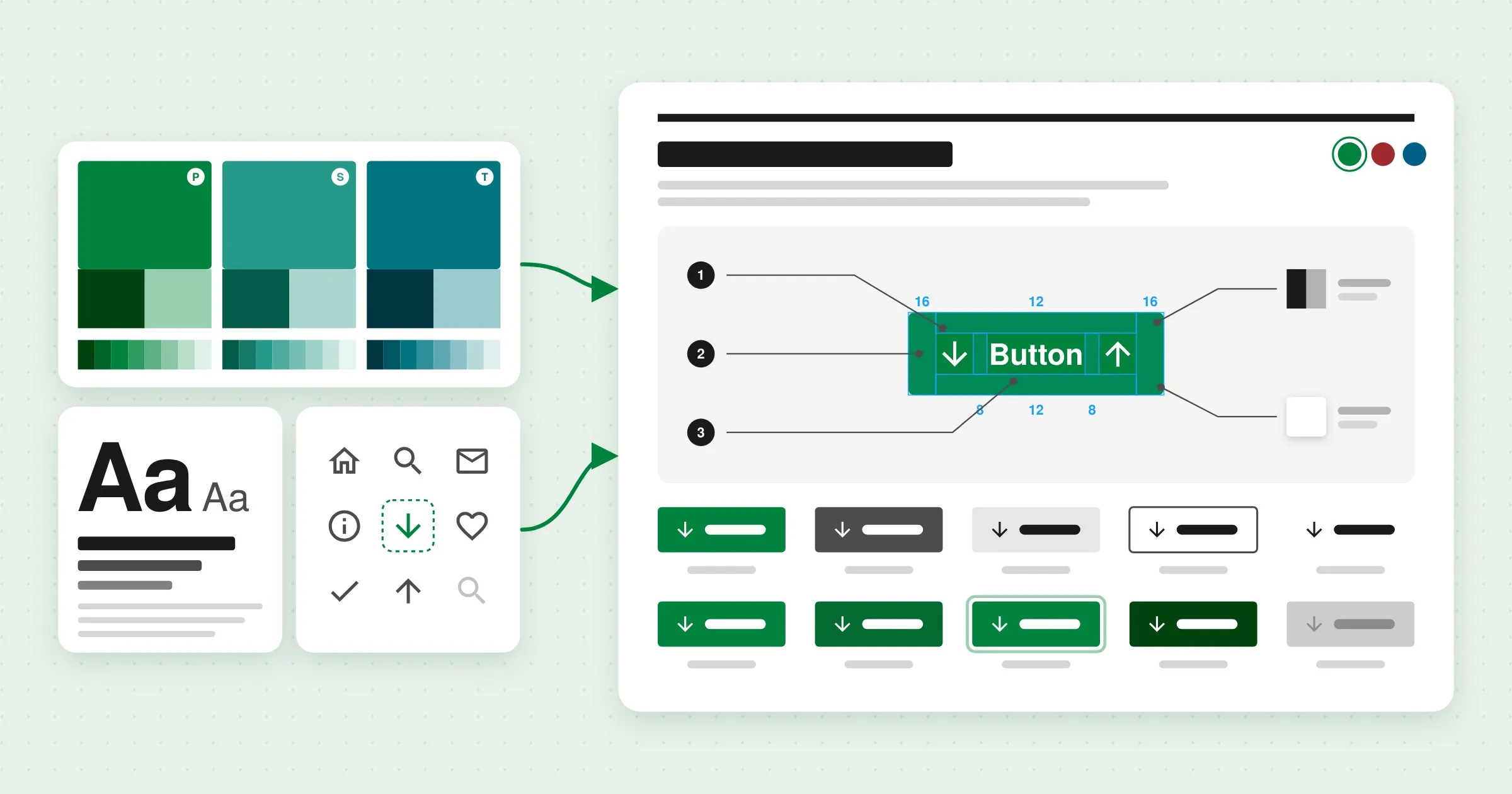
The system is built on shared foundations: a color theme with alternates, one typeface across a full type scale, and a single icon library. On top of those sit the components. I documented them so a designer could open a component and find what they needed: its anatomy, spacing, variants, states and when to use each one. I also onboarded and trained new team members on the system.
3Bring people together
A system lives through the people who use it. I created global ceremonies and ran town halls to showcase products built with the design system. Alongside them, office hours gave designers a place to bring questions.
I worked directly with the designers designing with the system. The showcases and office hours helped them connect, help each other and get inspired by what other teams were shipping.
4Connect with development
The same sessions brought designers closer to developers, so they could solve problems together. We co-created a QA relationship and a way to negotiate feasibility, and aligned on ways of working for handoff and design QA, so designs translated into code as intended.
5Extend to data
With the global IT group, I designed role-based Power BI dashboards, so every level of stakeholder could find, understand and report on what they needed. I checked in with developers often to keep the designs buildable in Power BI. Then I documented my design choices against chart-usage best practice and added components so future reports stay consistent.
Result
Cargill teams got a shared system to build on and documentation that answers their questions. Its designers became a community that helps each other through showcases and office hours, and handoff and design QA with developers got clearer. The system also gained standards for data and reporting.